
About the Course
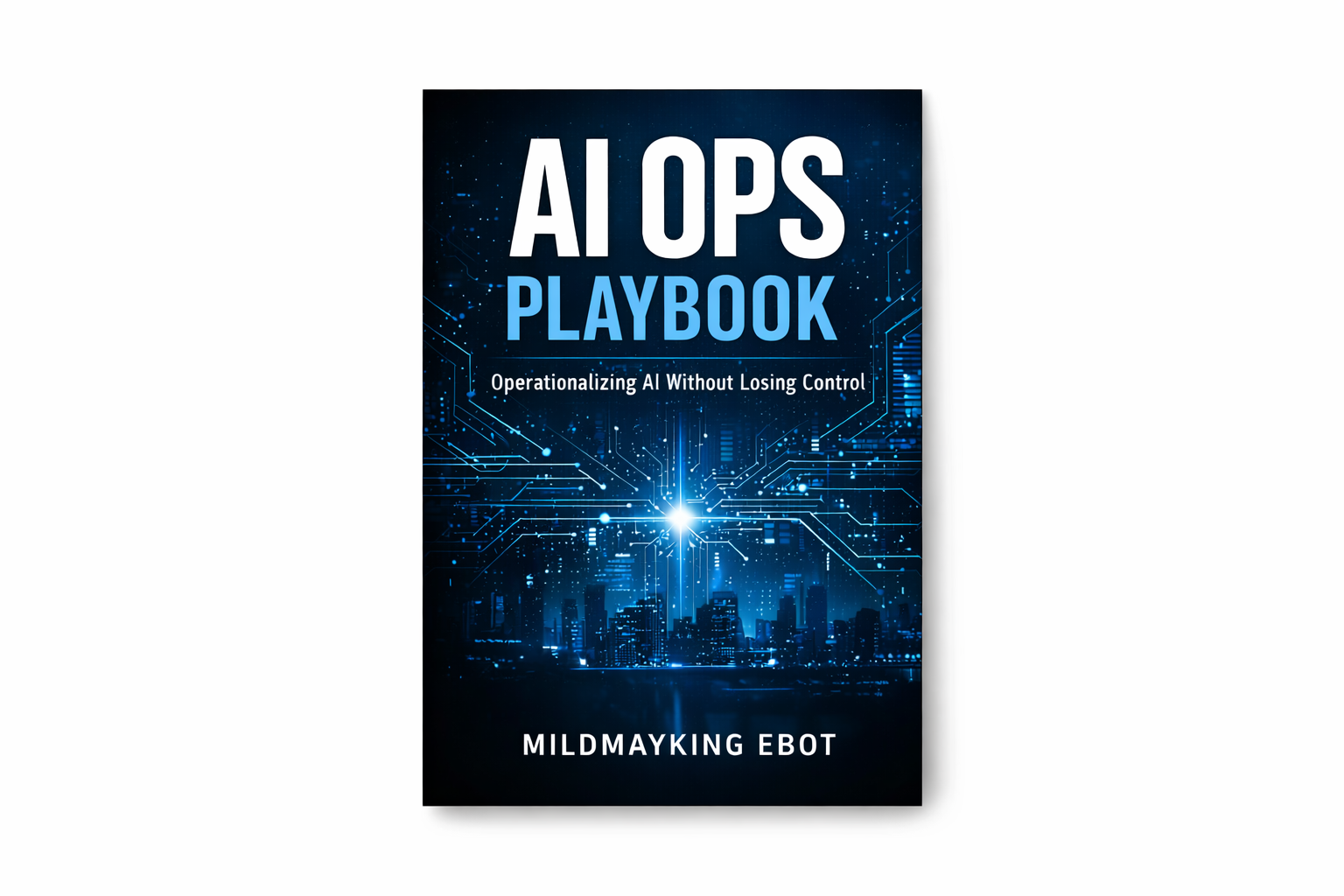
The AI Ops Playbook is a practitioner-focused course tailored for professionals responsible for real systems, incidents, and consequences. This operational training goes beyond AI tutorials, providing essential knowledge on defining AI boundaries, designing guardrails, and governing AI systems effectively at scale. Organizations are rapidly integrating AI into infrastructure tools, monitoring platforms, automation systems, and enterprise operations. However, most teams lack a clear operational framework for governing how AI systems interact with production infrastructure. Without proper AI operational controls, organizations risk: • Unintended automation actions • Loss of operational accountability • Incident escalation caused by AI-driven systems • Hidden operational dependencies • Automation drift across infrastructure environments The AI Ops Playbook provides a structured framework for managing these risks while enabling teams to safely integrate AI into modern IT environments. WHAT YOU WILL LEARN: A Complete Framework for Operating AI Systems in Production Governance Principles Define authority boundaries and maintain accountability for AI-assisted decisions. Incident Response Understand how AI can support incident analysis while preserving human decision authority. Automation Control Implement automation safeguards that prevent uncontrolled AI execution. Continuous Improvement Govern AI decision authority. • Manage AI-assisted incidents Control automation risks. • Maintain operational accountability Integrate AI into production systems safely Establish operational review practices that improve AI-enabled systems over time. You will also learn how to: - Define AI Boundaries: Learn how to define where AI may and may not act to prevent unchecked authority. - Design Robust Guardrails: Discover how to design guardrails that hold under pressure in AI systems. - Govern AI Systems at Scale: Master the art of governing AI systems at scale without slowing down delivery.

Define AI Boundaries
Learn how to define where AI may and may not act to prevent unchecked authority.

Design Robust Guardrails
Discover how to design guardrails that hold under pressure in AI systems.

Govern AI Systems at Scale
Master the art of governing AI systems at scale without slowing down delivery.

About the Creator
Mildmayking Ebot is an operations-focused technologist with experience designing, governing, and stabilizing complex production systems where failure has real consequences. His work centers on: Reliability and incident response Systems governance and accountability Operational risk management The safe integration of automation and AI into production environments Rather than approaching AI as a research or tooling problem, he approaches it as an operational responsibility—one that must be bounded, governed, and owned by humans at all times. This book reflects years of observing how systems actually fail: under pressure, with incomplete information, and in environments where incentives favor speed over safety. The AI Ops Playbook was written to give practitioners a framework that holds up in those moments—when theory stops mattering and accountability cannot be deferred.
Course Syllabus & Curriculum
Operating AI in Production Environments The AI Ops Playbook provides a practical operational framework for safely integrating AI systems into real-world production environments. The course focuses on governance, operational control, incident response, automation safeguards, and continuous improvement practices required to manage AI-enabled infrastructure. Students will learn how to operate AI systems responsibly while maintaining reliability, transparency, and operational accountability. Course Structure The program consists of 6 modules, a capstone operational simulation, and a final certification. Each module includes: • Short focused lessons • Operational scenarios • Knowledge checks and quizzes • Governance frameworks and practical examples Module 1 — Foundations of AI Operations This module introduces the operational principles required to safely integrate AI into production environments. Topics include: • What AI Ops is — and what it is not • Human-in-the-loop accountability models • AI usage risk zones (traffic-light governance model) • Core principles for safe AI operations By the end of this module students will understand how to define authority boundaries and governance frameworks for AI-assisted systems. Module 2 — AI in Incident Management This module focuses on the role AI should play during operational incidents and outages. Topics include: • AI-assisted signal triage • AI support during production incidents • Decision support vs decision authority • AI failure modes and operational guardrails Students will learn how to integrate AI into incident response workflows without losing human control. Module 3 — Automation Control Automation provides efficiency, but uncontrolled automation can introduce significant risk. Topics include: • Automation vs autonomy • Delegation boundaries for AI systems • Approval and execution models • Preventing automation drift Students will learn how to implement safe automation frameworks within AI-enabled environments. Module 4 — Governance & Accountability Operational governance is critical when AI systems influence infrastructure decisions. Topics include: • AI governance patterns • Logging and operational traceability • Compliance-ready workflows • Organizational accountability models Students will learn how to ensure AI systems remain observable, auditable, and accountable. Module 5 — Implementation Patterns This module explores how AI systems integrate into infrastructure and DevOps environments. Topics include: • AI operations architecture patterns • Safe deployment pipelines • Integration strategies for AI-enabled systems • Scaling AI infrastructure safely Students will understand how to deploy AI capabilities while maintaining operational safety and reliability. Module 6 — Continuous Improvement AI operational systems must evolve as environments change. Topics include: • Monitoring AI-driven systems • Feedback loops for operational learning • Retiring unsafe or outdated automation • Future-proofing AI operational practices Students will learn how to maintain long-term operational resilience in AI-enabled systems. Capstone Simulation The course concludes with a realistic operational incident scenario. Students will apply what they learned across all six modules to: • Evaluate AI recommendations during incidents • maintain governance boundaries • prevent automation escalation • implement safe operational responses Completion of the capstone demonstrates the ability to apply the AI Ops framework in real operational environments. Certification Students who successfully complete the course and capstone simulation receive a: Certificate of Completion Issued by Timeless Solutions, Inc. This credential recognizes understanding of the AI Ops operational framework for managing AI systems in production environments. Course Outcomes After completing the AI Ops Playbook, students will be able to: • Safely operate AI systems in production environments • Implement governance frameworks for AI-assisted systems • Manage AI-driven automation safely • Integrate AI into DevOps and infrastructure workflows • Maintain accountability and operational visibility • Reduce operational risk introduced by AI-enabled systems Course Duration Typical completion time: 3–5 hours However, students can progress at their own pace. Course Format • On-demand video lessons • Interactive quizzes and assessments • Real-world operational scenarios • Capstone incident simulation • Certificate of completion Course Prerequisites Recommended experience: • Basic understanding of IT operations • Familiarity with DevOps or infrastructure environments • General knowledge of AI tools or automation systems The course is designed for technical professionals, but advanced AI expertise is not required.
Curriculum
-
1
-
Course Introduction — AI Ops Playbook Free preview
-
Module 1 — FOUNDATIONS OF AI OPS Free preview
-
Lesson 1.0 — Module Overview Free preview
-
Lesson 1.1 — What AI Ops Is (and Is Not) Free preview
-
(Included in full purchase)
Quiz: Understanding AI Ops Scope
-
(Included in full purchase)
Lesson 1.2 — Human-in-the-Loop & Accountability
-
(Included in full purchase)
Accountability Reality Check
-
(Included in full purchase)
Lesson 1.3 — AI Usage Risk Zones (Traffic-Light Model)
-
(Included in full purchase)
Risk Zone Classification
-
(Included in full purchase)
Lesson 1.4 — AI Ops Core Principles
-
(Included in full purchase)
Principle Adoption Readiness
-
(Included in full purchase)
Authority Escalation Scenario
-
(Included in full purchase)
Module 1 Operational Clarity Survey
-
(Included in full purchase)
Module 1 Final Quiz
-
(Included in full purchase)
MODULE 1 — WRAP-UP
-
-
2
-
(Included in full purchase)
Module Intent
-
(Included in full purchase)
Lesson 2.0 — Module Overview
-
(Included in full purchase)
Lesson 2.1 — AI’s Role During Incidents
-
(Included in full purchase)
Incident Authority Fundamentals
-
(Included in full purchase)
Lesson 2.2 — AI-Assisted Signal Triage
-
(Included in full purchase)
Guardrails & Failure Modes
-
(Included in full purchase)
Lesson 2.3 — Decision Support, Not Decision Making
-
(Included in full purchase)
Operational Judgment
-
(Included in full purchase)
Lesson 2.4 — Failure Modes & Guardrails
-
(Included in full purchase)
Understanding AI Failure Modes & Guardrails
-
(Included in full purchase)
Incident Governance Confidence
-
(Included in full purchase)
Module 2 Final Quiz
-
(Included in full purchase)
MODULE 2 WRAP-UP.mp4
-
(Included in full purchase)
-
3
-
(Included in full purchase)
Module Intent
-
(Included in full purchase)
Lesson 3.0 — Module Overview
-
(Included in full purchase)
Lesson 3.1 — Automation vs Autonomy
-
(Included in full purchase)
Automation vs Autonomy
-
(Included in full purchase)
Lesson 3.2 — Delegation Boundaries
-
(Included in full purchase)
Delegation Boundaries
-
(Included in full purchase)
Lesson 3.3 — Approval & Execution Models
-
(Included in full purchase)
Approval & Execution Models
-
(Included in full purchase)
Lesson 3.4 — Preventing Automation Drift
-
(Included in full purchase)
Preventing Automation Drift
-
(Included in full purchase)
Module 3 Final Quiz
-
(Included in full purchase)
Module 3 Final Survey
-
(Included in full purchase)
MODULE 3 — WRAP-UP
-
(Included in full purchase)
-
4
-
(Included in full purchase)
Module Intent
-
(Included in full purchase)
Lesson 4.0 — Module Overview
-
(Included in full purchase)
Lesson 4.1 — Governance Patterns
-
(Included in full purchase)
Governance Control Fundamentals
-
(Included in full purchase)
Lesson 4.2 — Logging & Auditability
-
(Included in full purchase)
Operational Traceability Check
-
(Included in full purchase)
Lesson 4.3 — Compliance-Ready Workflows
-
(Included in full purchase)
Compliance and Decision Traceability
-
(Included in full purchase)
Lesson 4.4 — Organizational Ownership
-
(Included in full purchase)
Governance Ownership Evaluation
-
(Included in full purchase)
Module 4 Final Quiz - Governance & Audit Mastery Check
-
(Included in full purchase)
Module 4 Final Survey
-
(Included in full purchase)
MODULE 4 — WRAP-UP
-
(Included in full purchase)
-
5
-
(Included in full purchase)
Module Intent
-
(Included in full purchase)
Lesson 5.0 — Module Overview
-
(Included in full purchase)
Lesson 5.1 — AI Ops Architecture Patterns
-
(Included in full purchase)
Architecture Control Principles
-
(Included in full purchase)
Lesson 5.2 — Safe Deployment Pipelines
-
(Included in full purchase)
Deployment Risk Awareness
-
(Included in full purchase)
Lesson 5.3 — Integration Best Practices
-
(Included in full purchase)
Integration Risk Awareness
-
(Included in full purchase)
Lesson 5.4 — Scaling Safely
-
(Included in full purchase)
Scaling Readiness Check
-
(Included in full purchase)
Module 5 Final Quiz
-
(Included in full purchase)
Module 5 Final Survey
-
(Included in full purchase)
MODULE 5 — WRAP-UP
-
(Included in full purchase)
-
6
-
(Included in full purchase)
Module Intent
-
(Included in full purchase)
Lesson 6.0 — Module Overview
-
(Included in full purchase)
Lesson 6.1 — Monitoring & Feedback Loops
-
(Included in full purchase)
Monitoring for Operational Insight
-
(Included in full purchase)
Lesson 6.2 — Rotating & Retiring Automation
-
(Included in full purchase)
Automation Lifecycle Awareness
-
(Included in full purchase)
Lesson 6.3 — Lessons Learned & Operational Reviews
-
(Included in full purchase)
Operational Learning Practices
-
(Included in full purchase)
Lesson 6.4 — Future-Proofing AI Ops
-
(Included in full purchase)
Future Readiness Reflection
-
(Included in full purchase)
Module 6 Final Quiz
-
(Included in full purchase)
MODULE 6 — WRAP-UP
-
(Included in full purchase)
-
7
-
(Included in full purchase)
Scenario A global SaaS platform uses AI-assisted operations to monitor infrastructure. At 03:12 AM, the platform begins experiencing latency spikes across several microservices. Your team uses an AI operations tool that analyzes telemetry and recommends
-
(Included in full purchase)
-
8
-
(Included in full purchase)
Course Completion Note
-
(Included in full purchase)
What People Are Saying
Read testimonials from professionals who have transformed their AI operations with this course.
“This course finally puts structure around something most teams are improvising. AI Ops isn’t about tools—it’s about authority and accountability. This gave me language and frameworks I could take straight back to my team.”
Las Vegas, NV

“What stood out was the focus on incidents and automation drift. We’ve seen AI quietly gain influence over time, and this course explains exactly why that’s dangerous and how to stop it.”
Senior IT / Ops
“Most AI content ignores governance or treats it like paperwork. This course treats governance as an operational control. That distinction alone makes it worth it.”
Practitioner / Architect
Text-only testimonials are quick to scan and can highlight the value of your product at a glance.
Las Vegas, NV
"The AI Ops Playbook is one of the few courses that actually explains how to operate AI systems in production environments. It provides a clear framework for AI governance and automation control within DevOps operations."
Senior DevOps Engineer
Text-only testimonials are quick to scan and can highlight the value of your product at a glance.
Las Vegas, NV
This course finally explains how to manage AI operational risk in real production systems. The incident management framework alone was incredibly valuable.
Site Reliability Engineer
“This course finally puts structure around something most teams are improvising. AI Ops isn’t about tools—it’s about authority and accountability. This gave me language and frameworks I could take straight back to my team.”
Las Vegas, NV
Text-only testimonials are quick to scan and can highlight the value of your product at a glance.
Las Vegas, NV
Text-only testimonials are quick to scan and can highlight the value of your product at a glance.
Las Vegas, NV
“What stood out was the focus on incidents and automation drift. We’ve seen AI quietly gain influence over time, and this course explains exactly why that’s dangerous and how to stop it.”
Senior IT / Ops
“Most AI content ignores governance or treats it like paperwork. This course treats governance as an operational control. That distinction alone makes it worth it.”
Practitioner / Architect
"The AI Ops Playbook is one of the few courses that actually explains how to operate AI systems in production environments. It provides a clear framework for AI governance and automation control within DevOps operations."
Senior DevOps Engineer
This course finally explains how to manage AI operational risk in real production systems. The incident management framework alone was incredibly valuable.
Site Reliability Engineer
Frequently Asked Questions
What is AI Ops? AI Ops refers to the operational frameworks used to safely integrate AI systems into production environments. Who should learn AI operations? DevOps engineers, SREs, IT operations managers, cloud architects, cybersecurity professionals, and infrastructure engineers. Does this course teach machine learning? No. This course focuses on operating AI systems in production environments, not building AI models. Will I receive a certificate? Yes. Students who complete the course and capstone scenario receive a certificate of completion.
Ready to Master AI Operations?
Enroll today to gain expertise in defining AI boundaries, designing robust guardrails, and governing AI systems at scale.
$149.99